
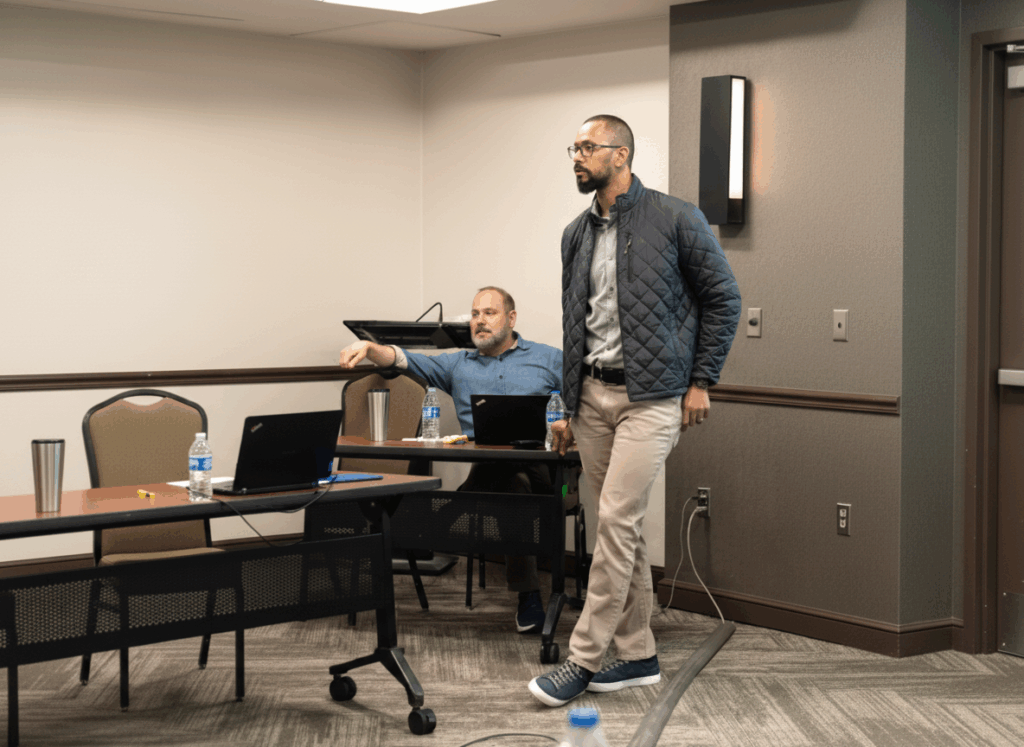
Last week, I had a conversation with VP Product and Development Abel Fernandes on the latest releases for Bizweaver (2025R2) and Container Management. If you’ve never had the pleasure of speaking to Abel, he is as controlled, steady-handed as he is pragmatic, and you’ll see this in his approach to Third Wave’s product design strategy. According to Abel, Third Wave product design should be defined by customer needs first, then by feedback from our teams that build and support the solutions, and third in collaboration with SAP’s roadmap for Business One.
Why Container Management Led the Move to the Web Client
We’re marching towards the full release of SAP Business One web client and Abel’s team is being deliberate about which products to move first, when, and why.
“SAP is clearly headed in this direction, and we wanted real experience quickly with the web client framework,” Abel said. “At the same time, the tools are still evolving, so we had to be realistic.” After deliberation, the team landed on Container Management because it struck the right balance of speed and function. It’s solution-focused enough for web client extensibility to be meaningful for users, but also simple enough that we could move it quickly. “That combination was key,” Abel noted. “We needed to protect what customers rely on while still adapting the product to a new platform.”
The migration itself was a team effort. On Abel’s team, Deepesh Gopal (Senior Dev) has a plethora of SAP experience and has led development of Container Management for most of its history. Lead QA engineer Sam Thomas has a similar background and has also been involved with SAP for over 15 years. Deepesh, Sam, and Abel worked closely with Mike Neuendorff, who is a stranger to nobody in the Third Wave world, who was both the subject matter expert for web client functionality.
SAP’s Web Client Resources for Partners
Third Wave benefits from early access to web client beta releases, documentation, and development tools.
“It lets us start working with the platform before features are fully released,” Abel explained. “There’s also a strong partner community where teams share what they’re learning, which helps a lot when you’re working with newer technology.” Since web client is still on the horizon, both SAP’s resource pool and Abel’s “take-to-web-client” evaluation framework are evolving, which can obviously present challenges. According to Abel, the biggest one was simply pinpointing the current limitations of the web client.
“We ran into those limits pretty quickly [during development],” he explained, “which forced us to rethink some approaches and find different ways to deliver similar outcomes.” Container managements opaque requirements allowed for a more agile repositioning and ultimately allowed the dev team to deliver on a full-feature web client product while learning lots along the way.
On the topic of the team, one theme Abel kept coming back to was the strength and adaptability of the team. With an average tenure of more than ten years, the group brings a level of continuity that’s relatively hard to find today in tech.
“That experience matters – people don’t just know the code. They understand the customers, the industries, and the history behind the decisions we’ve made,” Abel explained. When Abel first joined the team, what surprised him most wasn’t just the average tenure, but the mindset that came with it. “Even with that depth of experience, there’s a lot of curiosity. People are excited about new ideas, new technology, and finding better ways to do things. It’s a very collaborative environment, and people take ownership of what they build.”
AI: Bizweaver and What’s Next
Our conversation shifted to the new documentation feature highlighted in Bizweaver 2025R2. This is Third Wave’s first live AI feature, and according to Abel, the idea didn’t start with AI—it started with customer pain. When reviewing feedback gathered for Bizweaver from Third Wave’s Customer Day earlier this year, “documentation kept coming up as a problem,” he said. “Our users and consultants build powerful workflows, but documenting them takes time, and it’s usually the first thing to fall behind.” Using AI to generate documentation felt like a practical solution rather than just AI-novelty. By analyzing workflow structure and logic and using the OpenAI API, Bizweaver can now produce clear, human-readable documentation that explains not just what a workflow does, but how it works.
“It’s not just filling in templates,” Abel emphasized. “The system understands the workflow and explains it in plain language.” The feature is designed to help a wide range of users, from teams onboarding new employees to organizations with compliance requirements and administrators responsible for maintaining workflows. In practice, Abel sees it benefiting almost anyone who needs to understand or manage automation.
Bizweaver 2025R2 underscores Abel and Third Wave’s overall approach to introducing AI: use AI to solve functional problems rather than working it in wherever. At the end of the day, Abel explains, Third Wave is committed to bridging the functionality gap between software and our customers, and AI is another tool (a powerful one albeit) for us to do that.
As for what’s next for Bizweaver, the focus is on control and visibility. Upcoming enhancements will give users better ways to manage how workflows run, clearer insight into connection health, centralized monitoring, and safer upgrade processes. “All of it comes back to customer feedback,” Abel said. “The goal is to make Bizweaver easier to operate and more reliable for mission-critical use.”
Abel & Third Wave
Abel has led Third Wave’s dev team since early 2021. the When I asked what brought him to Third Wave, his answer was simple.
“What really pulled me in was the proximity to real problems,” Abel said. “We’re building products that directly affect how customers run their businesses day to day. That connection has always mattered to me.”
Whether it’s moving products to the web client or introducing AI in a meaningful way, Abel’s approach is consistent: be intentional, stay close to customer needs, and build with the long term in mind.