

Product definition & engineering
Bills of material & routings, Engineering Change Control, a rules-based Product Configurator, Manufacturing Estimates, the PTC Arena connector and marketplace CAD connectors.
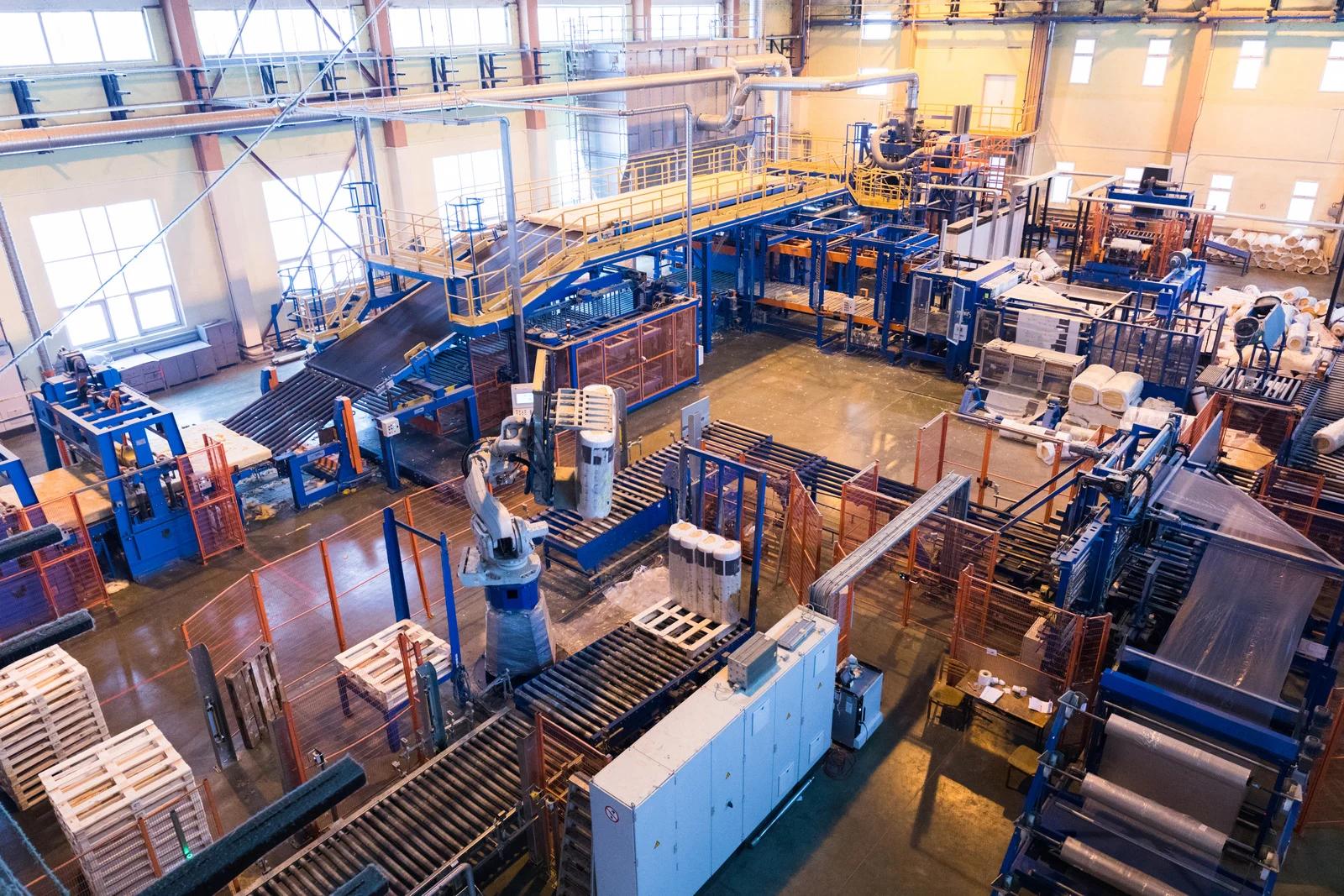


Discrete manufacturing ERP configured around the way your plant actually runs: job shop, make-to-order, configure-to-order or engineer-to-order. Discrete manufacturers do not need another accounting package with a production tab bolted on. You need estimating that reflects your real burden rates, engineering change control that does not orphan a live work order, and a shop floor that reports itself.







Where the money leaks
None of them are software problems on their own. They are the same problem — production, engineering and finance keeping separate versions of the truth. Here is what each one costs before anyone calls it a crisis.
Estimating happens in a spreadsheet built by someone who has since left. Burden rates are stale, setup time is a fudge factor, and the number that goes to the customer has never been reconciled against a finished job.
Costs you: lost bids on the work you wanted, won bids on the work you did not.
Drawing goes to rev C, the floor is still building to rev B, and purchasing has already committed to the old material. Nobody finds out until kitting comes up short.
Costs you: scrap, rework and a credit memo, every single time.
Work-in-progress is reconstructed from job tickets, whiteboards and memory two weeks after the fact. By the time the number is right, the decision it should have informed is already made.
Costs you: decisions taken on month-old data.
Sales quotes a date because the customer asked for one. There is no committed-capacity view to check it against, so the plant absorbs it in overtime and air freight.
Costs you: on-time delivery you cannot defend, and expedite spend nobody budgets.
Lot and serial records live in binders, spreadsheets and a shared drive. A recall inquiry or a customer audit becomes a two-week manual exercise with real liability attached.
Costs you: audit exposure, and a single point of failure who takes vacation.
The system works, which is the problem. It cannot be reached from the floor, the road or a second site, the customizations block upgrades, and the vendor roadmap ended years ago.
Costs you: every new plant, channel or acquisition costs more than it should.
The platform, in full
Engineering change control, rules-based configuration and shop floor data collection are native — not third-party add-ons you license separately and pray keep working after an upgrade.
Bills of material & routings, Engineering Change Control, a rules-based Product Configurator, Manufacturing Estimates, the PTC Arena connector and marketplace CAD connectors.
Material Requirements Planning, Advanced Planning & Scheduling, finite capacity scheduling, Production Management & WIP, Manufacturing Data Collection and the Shop Floor Kiosk.
Inventory Management, lot & serial traceability, Warehouse Management (WMS), purchase orders & requisitions, Sales Order Management and commerce connectors.
Financial Management & payroll, multi-entity & intercompany, Project Accounting, Field Service & CRM, role-based dashboards, and business events & alerts.
Sectors we know cold
A machine shop and a Class II device manufacturer both build to a drawing. What they have to prove afterwards is nothing alike. We configure for the proof, not just the production.
Also implemented for fabricated metals, industrial equipment, plastics and rubber, and consumer durables. If your sector is not listed, the questions we ask on the first call are the same.
Tight tolerances, serialized parts, and a quote-to-cash cycle where the estimate is the only thing standing between you and a loss-making job.
What has to hold up
Long-lead components, approved vendor lists, and BOMs that change faster than the purchase orders chasing them.
What has to hold up
Design history, device master records and complaint handling that must survive an audit — not just a good production month.
What has to hold up
AS9100, first-article inspection, and traceability requirements that assume you can produce the record years after the shipment.
What has to hold up
Cost of doing nothing
Move the five numbers you already know. The assumptions behind each line are printed underneath — deliberately conservative, and yours to argue with on the call.
ROI calculator — placeholder
Interactive calculator to be built here. Inputs: annual revenue, production orders per month, hours per week building reports by hand, annual expedite spend, average inventory on hand. Output: annual recoverable by line, with the assumption printed under each, and the three-year total.
Why Third Wave
Software is the easy half. What decides whether a manufacturing ERP project holds up in year three is who stays on the account after go-live.
The consultant who scopes your project runs it, and stays on your account afterwards. No handover to a support queue that has never seen your plant, and no re-explaining your costing method every year.
Two decades of mid-market manufacturing and distribution work as an Acumatica Gold Partner. We arrive knowing what a routing, a burden rate and a first-article report are, so discovery is about your exceptions rather than the basics.
Some plants should not replace their ERP this year, and some requirements Acumatica genuinely does not cover. You get that in writing in the fit summary, before the quote.
Reviews reflect Third Wave’s ERP consulting and support practice across mid-market manufacturers and distributors.

They provided automated programs that have greatly reduced manual labor time, reduced errors, and simply provided data we otherwise would not have had access to easily.
They are responsive, consistent, and thorough; they are able and willing to examine the underlying business process to best understand which technological options will address the true need.
Third Wave Business Systems has been a highly valued partner, consistently helping us solve complex business challenges. They streamline operations, adapt solutions to our specific needs, and provide timely support that minimizes downtime and maximizes efficiency.
Manufacturing conditions, ERP evaluation guidance and what we are seeing on plant floors this quarter.
 ERP Implementation
Unhappy with your SAP Business One partner? See how a partner switch works, what stays the same, and when you need a second implementation.
 ERP Implementation
Every implementation moves through the same arc. Knowing the arc up front removes surprises and shows you where attention pays off most.
 ERP Implementation
Phases overlap in practice, and the ranges below reflect a typical mid-market project. Your discovery will sharpen them.