

A Third of This Year's Food Recalls Were Label Problems: This Month in Food and Beverage
- Third Wave StaffInsights from the Third Wave team
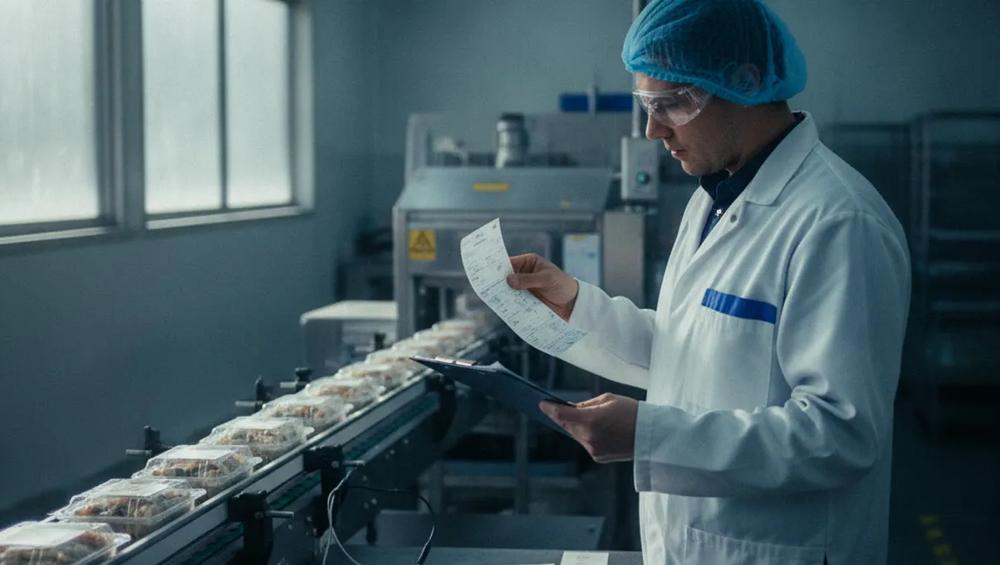
Regulators issued 363 warning letters to food companies through late July, ahead of 354 at the same point last year and 293 in 2023. June alone produced 86, the busiest month of 2026. No new statute arrived to explain the jump. The same rules are being read more closely, and the price of a loose record went up while nobody was watching.
For a maker between $10M and $200M in revenue, the exposure here is not exotic or technical. Undeclared allergens account for 85 of the 237 FDA food recalls tracked so far this year, more than any other single cause. Milk was missed on 20 labels, soy on 19, sesame and wheat on nine each. Those failures do not begin on the production line. They begin in a spec sheet, a supplier substitution, or a label revision nobody reconciled against the batch record.
You want to add SKUs, win a retail slot, and keep the plant running lean. Rising enforcement makes each of those moves riskier when your formulas, suppliers, and labels live in separate places. Third Wave works with mid-market manufacturers on precisely this problem, and our free ERP assessment is a reasonable place to measure how exposed you are before an auditor does.
In this issue
- FDA warning letters reach 363 through late July, a three-year high
- Undeclared allergens drive 85 of 237 recalls, foreign material another 35
- Food traceability compliance pushed to July 2028 amid a 30,000-case outbreak
- Synthetic dye phase-out faces a 400 to 500 percent demand gap in natural colors
- Cocoa costs push reformulation toward carob and fava bean
- August ISM prices index holds at 71.1 while new orders cool to 53.7
- USDA forecasts all-food prices up 3.0 percent, grocery up 2.5 percent
- Private label reaches 24 percent of dollar share and $330 billion
- Plant expansions total more than $30 billion as capacity buys capability
Enforcement Tightened Without a Single New Rule
The recall data reads like a quality-control checklist rather than a food safety crisis. Beyond allergens, another 35 recalls involved foreign material such as metal, glass, or plastic, a rising byproduct of the co-manufacturing boom, and 10 cited undeclared color additives. Salmonella drove 44 recalls, closing in on 53 for all of last year, with much of the surge tracing back to one contaminated milk-powder supplier whose product cascaded into dozens of downstream brands this spring. One supplier failure, dozens of recalls. If you cannot name every finished SKU containing a given lot of a given ingredient within an hour, the same risk sits on your own balance sheet.
Sesame is still catching brands out three years after the FASTER Act made the ingredient the ninth major allergen, including in products where the presence should be obvious. Warning letters citing the Foreign Supplier Verification Program have also climbed, which shifts attention from your own plant to the paperwork behind everyone selling to you. Smaller makers absorb this asymmetrically. A national brand has a regulatory affairs department. A 120-person plant has a quality manager with a spreadsheet and a full week already.
The federal traceability picture, meanwhile, went the other direction. An appropriations rider blocks FDA from enforcing the additional traceability records rule until July 2028, three years past the original January 2026 compliance date. A food-safety coalition has asked Congress to rescind the delay, citing a Cyclospora outbreak with nearly 30,000 reported illnesses and a lettuce supplier unable to produce distribution records the rule would have required. Read the reprieve carefully. Federal enforcement paused. Retailer and foodservice buyers did not, and they increasingly write lot-level traceability into supply agreements regardless of what FDA is enforcing this quarter.
The Color Deadline Nobody Has Supply For
General Mills finished pulling petroleum-based dyes from every US cereal in the portfolio, with 90 percent of its retail lineup converted. A dozen of the largest food companies have pledged the same by the end of 2027. The supply side tells a harder story. A National Confectioners Association report by RTI International found the US certified roughly 21.4 million pounds of FD&C dyes in 2025 against a non-FD&C market of about 12 million pounds, and matching a synthetic dye often takes ten times the volume of a plant-derived alternative. Demand for natural colorants needs to rise 400 to 500 percent against agricultural and processing capacity nobody has built yet. Take the estimate as directional. The gap is the point.
The products at stake generated $57.8 billion in sales last year, with beverages at 28.9 percent and candy at 22.4 percent. Sensient is investing up to $250 million to expand natural color capacity, which helps in 2028 and does nothing for a purchase order in November. Large buyers will contract the available supply first. If your product depends on a bright red or a specific blue, the sourcing conversation needs to happen now, not after a retailer sets a date for you.
Reformulation pressure is not limited to color. High cocoa prices have European makers testing carob and fava bean substitutes, and lecithin is being swapped out over supply, cost, and allergen concerns. Every substitution carries a cost delta, a shelf-life question, and a new allergen statement. Refer back to the recall data above for what happens when the last of those three lags the first two.
Input Costs Are Still Winning the Argument
The August ISM Manufacturing PMI came in at 54.6 percent, an eighth straight month of expansion but a point below July. The composition matters more than the headline. New orders eased three points to 53.7, backlogs fell to 51.8, and the prices index held at 71.1, unchanged from July. Food, beverage, and tobacco products was one of five large industries reporting higher input prices in August, with survey comments blaming steel and aluminum, tariffs, and petroleum-linked packaging. Demand is softening at the margin while the cost side refuses to.
Consumers are not absorbing the difference. USDA now forecasts all-food prices up 3.0 percent in 2026, with grocery prices up 2.5 percent and restaurant prices up 3.6 percent. Grocery inflation running below your input inflation means the pass-through window is narrow and closing. Margin has to come from yield, changeover time, and knowing true landed cost per SKU rather than from the price tag.
Private label is the clearest evidence of where the shopper went. Store brands reached $330 billion in US sales and 24 percent of retail food and beverage dollar share, with the strongest first-half volume growth in beverage and refrigerated categories. For a branded mid-market maker, store brands are competitive pressure. For a plant with spare capacity and clean documentation, private label and co-manufacturing work is a real revenue line, though winning it requires passing a customer audit and costing a contract accurately enough to keep the margin you quoted.
Capacity Is Being Bought for Capability
US food and beverage plant expansion construction now represents more than $30 billion in committed investment. The interesting pattern sits underneath the total. Revolution Foods acquired Ardella's to add pizza and burrito formats to a school-channel portfolio, and fairlife opened a new dairy processing site in Webster, New York. Neither move is about raw volume so much as what a network produces reliably and reconfigures quickly. Adding two high-velocity formats reshapes allergen control plans, sanitation windows, and label management all at once.
Labor remains the quiet constraint behind every one of these decisions. Meat industry executives report federal immigration activity continuing to cramp hiring, without the visible raids of last year. Packaging automation has grown more accessible for smaller operations as collaborative robots drop the fencing and programming burden, which is the practical answer for a plant running overtime to cover a line nobody applied to staff.
The Bottom Line
Every story here resolves to the same question: how fast do you answer a question about your own product. Which SKUs contain the recalled lot. What the new colorant does to unit cost. Whether the co-pack contract clears margin at current input prices. Firms with one connected record answer in minutes. Firms with four systems and a spreadsheet answer in days, and enforcement, retail buyers, and reformulation deadlines are all moving faster than days.
The regulators did not write a new rule this year. They simply started checking the homework more often.
In case you missed it
- Factories Started Hiring Again. Filling the Jobs Is the Harder Half: This Month in Manufacturing
- Tariff Refunds Are Live While Wholesale Margins Slip to 3.8%: This Month in Wholesale Distribution
- Memory Prices Nearly Doubled in a Quarter and Lead Times Passed 30 Weeks: This Month in High-Tech and Electronics
- Machinery Orders Run 32% Ahead of 2025, but Shipments Cannot Keep Up: This Month in Industrial Equipment
Where to start
Traceability, allergen accuracy, and true landed cost are the same problem wearing three hats. All three depend on one connected set of records covering formulas, suppliers, lots, labels, and cost. We help mid-market food and beverage companies build exactly this, usually on SAP Business One. Start with the free ERP assessment for a clear read on where your records break, or book a consult and walk us through the last recall scare you had. No pitch, only a straight answer.