


Home  /  Resources  /  Blog
August 5, 2026
8 min. read

Tariff Refunds Are Live While Wholesale Margins Slip to 3.8%: This Month in Wholesale Distribution

, Insights from the Third Wave team
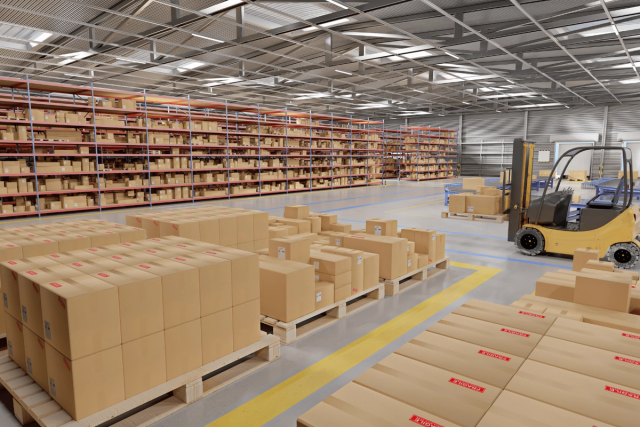
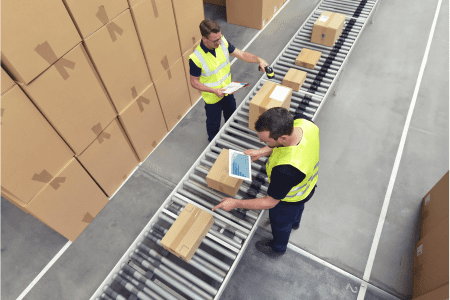
Warehouse operations manager reviewing customs entry paperwork at a mid-sized distribution shipping dock

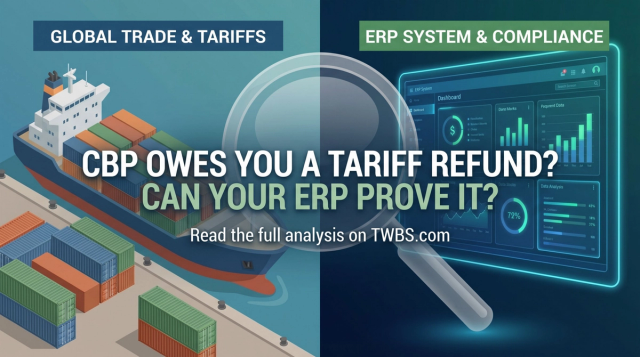
Customs is now handing money back to importers, and most mid-sized distributors have no idea whether they are in line for it. About 330,000 importers paid roughly $166 billion in IEEPA duties across more than 53 million entries. After the Supreme Court struck those duties down, CBP opened a refund portal to process claims. One rule decides who collects: you had to be the importer of record. Buy the same goods through another U.S. distributor and the refund belongs to somebody else.

You want to protect margin without raising prices on customers who are already resisting. Refund recovery is the rare lever which does exactly this, and the deadline-driven paperwork rewards distributors who know their own entry history. Meanwhile the industry’s operating margin fell to 3.82% in Q2, inventories climbed for a fifth straight month, and truckload spot rates ran 43% above last year. The cost side is moving faster than the price side.

For a distribution business in the $10M to $200M range, this month asks one question: do you know your true landed cost, entry by entry and SKU by SKU, or are you guessing at where the margin went?

In this issue

  • Customs refund portal opens, but only importers of record collect
  • Wholesale operating margin drops to 3.82% in Q2
  • Wholesale inventories hit $945.9 billion on a fifth straight monthly build
  • Truckload spot rates run 43% above last year
  • Electrical distributors post 10.1% June growth as consolidation eats gross margin
  • Only 26 of 300-plus distributors run AI in production
  • Robotics-as-a-service turns automation into a monthly line item
  • Lower-middle-market distributors trade at 6.5x to 9.5x EBITDA

The Money on the Table

Customs opens a refund portal for struck-down IEEPA tariffs

Source: The Observer

The Supreme Court’s decision in Learning Resources Inc. v. Trump found IEEPA does not authorize a president to impose tariffs, voiding the trafficking duties on China, Canada, and Mexico plus the reciprocal duties under the same law. CBP is processing claims through the Consolidated Administration and Processing of Entries tool in its ACE portal, documented here.

The eligibility test is narrow and mechanical. Direct importers of food, machinery, components, furniture, auto parts, and agricultural supplies are the likeliest claimants. Distributors who bought landed-cost goods from another U.S. importer are not. Pulling three years of entry data, matching it to HTS codes, and reconciling against duty paid is a records exercise. Distributors with clean, queryable purchase and customs history will file. Distributors reconstructing from paper and spreadsheets will run out of clock.

Section 232 drawback rules no longer follow one standard

Source: Customs Manager

Section 301 duties remain broadly drawback-eligible. Section 232 steel, aluminum, and copper duties no longer follow a single rule, which means eligibility now turns on the specific product and proclamation. Treat drawback as a per-SKU question, not a policy-level one.

Margin Is Where the Pressure Shows

Wholesale operating margin falls to 3.82% in Q2 2026

Source: CSIMarket

Operating margin across the wholesale industry dropped 0.65 points from 4.47% the prior quarter, landing below the recent 4.27% average. A 65 basis point slip sounds small until you price it against a 3.8% base. On $50 million in revenue, the swing is about $325,000 of operating income gone in a quarter. Distributors absorbing tariff-inflated vendor costs while holding customer prices are the ones eating it.

Electrical distributors grow 10.1% in June while gross margins compress

Source: tED magazine, Baird Electrical Distribution Survey

Electrical distribution revenue rose 5.8% in April, 4.9% in May, and 10.1% in June against Q2 2025. Datacomm ran hotter still at 11.8% in June. Prices climbed 4.6% in electrical and 3.6% in Datacomm, with the Midwest up 7.8% and the West up only 2.6%.

The respondent comments are more useful than the headline numbers. One distributor: “Gross margins are decreasing due to competition consolidation, but revenue is increasing.” Another: “Demand is high, and supply chains still have disruptions they are working through. Shortage of labor exacerbates the problem.” Data centers are pulling demand while residential and commercial construction sag. Growing revenue on shrinking margin is a working-capital problem dressed up as a good quarter.

Wholesale inventories reach $945.9 billion, up for a fifth straight month

Source: U.S. Census Bureau

June inventories rose 0.3% from May and 4.4% from June 2025, the fifth consecutive monthly build. Some of the accumulation is deliberate hedging against tariff and supply volatility. Some is stock nobody meant to buy. The two look identical on a balance sheet and behave nothing alike in a downturn. Knowing which SKUs are strategic buffer and which are dead weight is the difference between insurance and a write-down.

Truckload spot rates run 43% above last year

Source: ACT Research

Aggregate truckload spot rates excluding fuel rose 43% year over year in June. Contract rates rose 13%, which signals the increase is migrating from spot into the rates you sign for next year. Capacity left the market rather than demand arriving, so the tightening is structural. Distributors quoting delivered pricing off last year’s freight assumptions are quoting at a loss and will not see it until the invoices land.

Technology Separates the Field

Only 26 distributors out of more than 300 run AI in production

Source: Distribution Strategy Group

DSG evaluated more than 300 North American distributors over two years and verified production AI deployments at 26. Roadmaps, press releases, partnerships, and pilots were all excluded. The companies who made the list spent years modernizing systems and cleaning data before embedding AI into pricing, sales, service, and warehouse operations. Separately, NAW released an AI governance framework built with the AI Applied Consortium, covering risk, transparency, and workforce development.

The lesson for a leaner operation is inverted from the usual pitch. The constraint is not model access. Everyone has the same models. The constraint is whether your item master, pricing tables, and transaction history are clean enough to feed one. Data hygiene is boring, cheap, and the entire moat.

Robotics-as-a-service moves automation from capex to a monthly fee

Source: RoboticsTomorrow

The RaaS market was worth about $2.21 billion in 2025 and is tracking toward $14.56 billion by 2035, growing above 21% annually. The provider owns the hardware, handles maintenance, and pushes updates. The customer pays a recurring fee, sometimes tied to output. PitchBook data cited by Align BA points to the same shift opening automation to regional distributors and 3PLs unable to justify a capital project. Separately, 60% of warehouses plan to raise automation budgets by 20% this year, with spend shifting below the $1 million mark.

Six-figure capex was the gate keeping automation out of $30 million distributors. Subscription pricing removes the gate. What replaces it is a diagnosis problem: renting a robot for the wrong station buys you a faster bottleneck.

Valuations Reward the Middle

Lower-middle-market distributors trade at 6.5x to 9.5x adjusted EBITDA

Source: CT Acquisitions

Distributors in the $10M to $25M revenue band with $1.5M to $4M of adjusted EBITDA transact in an observed range of 6.5x to 9.5x adjusted EBITDA, per GF Data. Below $3 million in revenue, businesses trade at 3.0x to 5.0x seller’s discretionary earnings. Recurring MRO revenue share is the dominant multiple driver across every band.

Two things follow. Crossing from owner-operator scale into the lower middle market roughly doubles the multiple, so operational maturity is worth real money at exit. And a buyer paying 8x adjusted EBITDA will scrutinize the adjustments, which means clean financials and defensible margin data are part of the valuation, not paperwork after the handshake.

The Bottom Line

Revenue is fine this month. Cost control is the problem. Vendor prices, freight, and labor are all rising faster than what customers will accept, and 65 basis points of operating margin walked out the door in a single quarter.

Three of this month’s stories reward the same capability. Refund claims need clean entry and purchase history. AI in production needs clean master data. An 8x exit multiple needs defensible financials. None of those is a technology purchase. Each is a records discipline you either have or spend a painful year building.

The distributor who knows exact landed cost per SKU is filing a refund claim this quarter. The one who does not is still trying to work out where the margin went.

In case you missed it

If you run a distribution business and cannot see landed cost, true margin by customer, and real inventory position in one place, start there. Take the ERP assessment or book a conversation with Third Wave. We help distributors turn scattered records into decisions.

Let's talk.

We’re your partner to grow and thrive through change.

Ready to transform your business operations with SAP Business One? Our team of certified specialists is here to help you streamline processes, improve efficiency, and drive growth. Let’s discuss how we can tailor a solution for your specific needs.